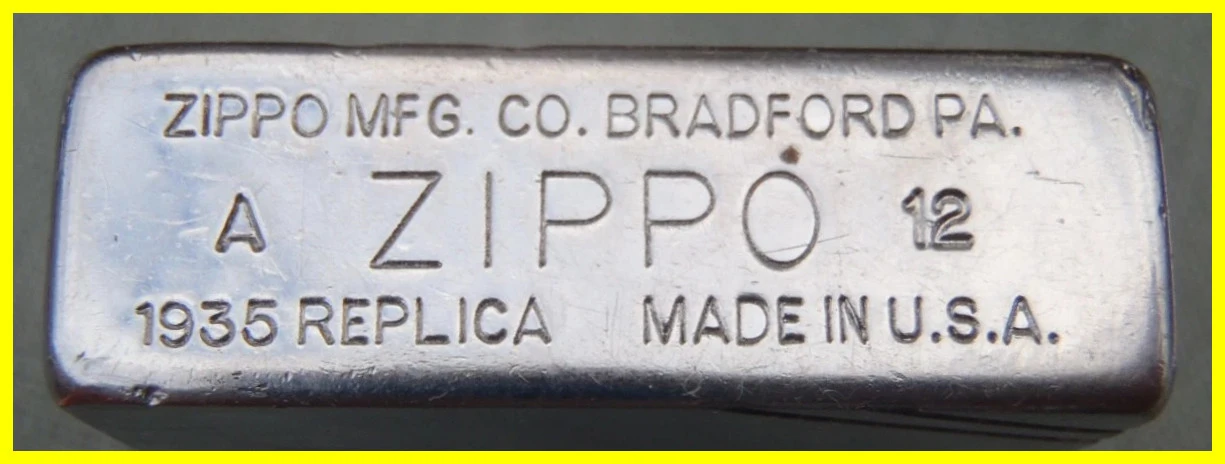
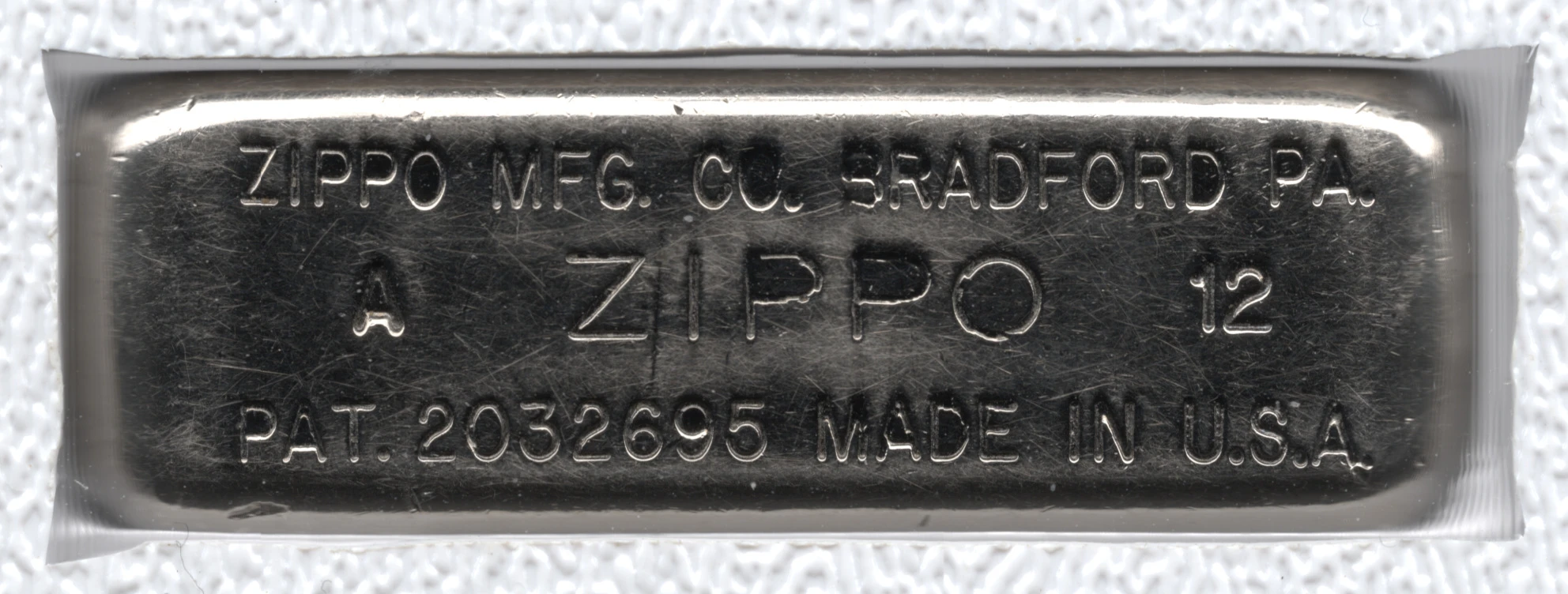
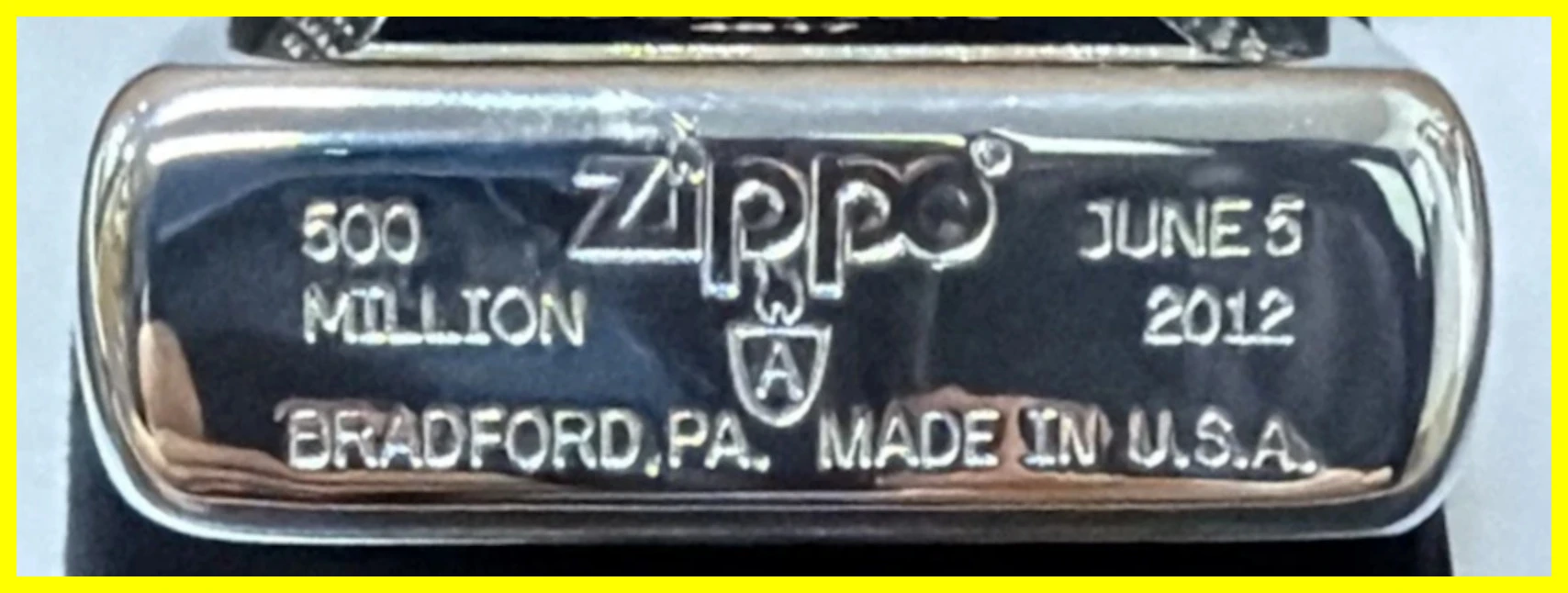
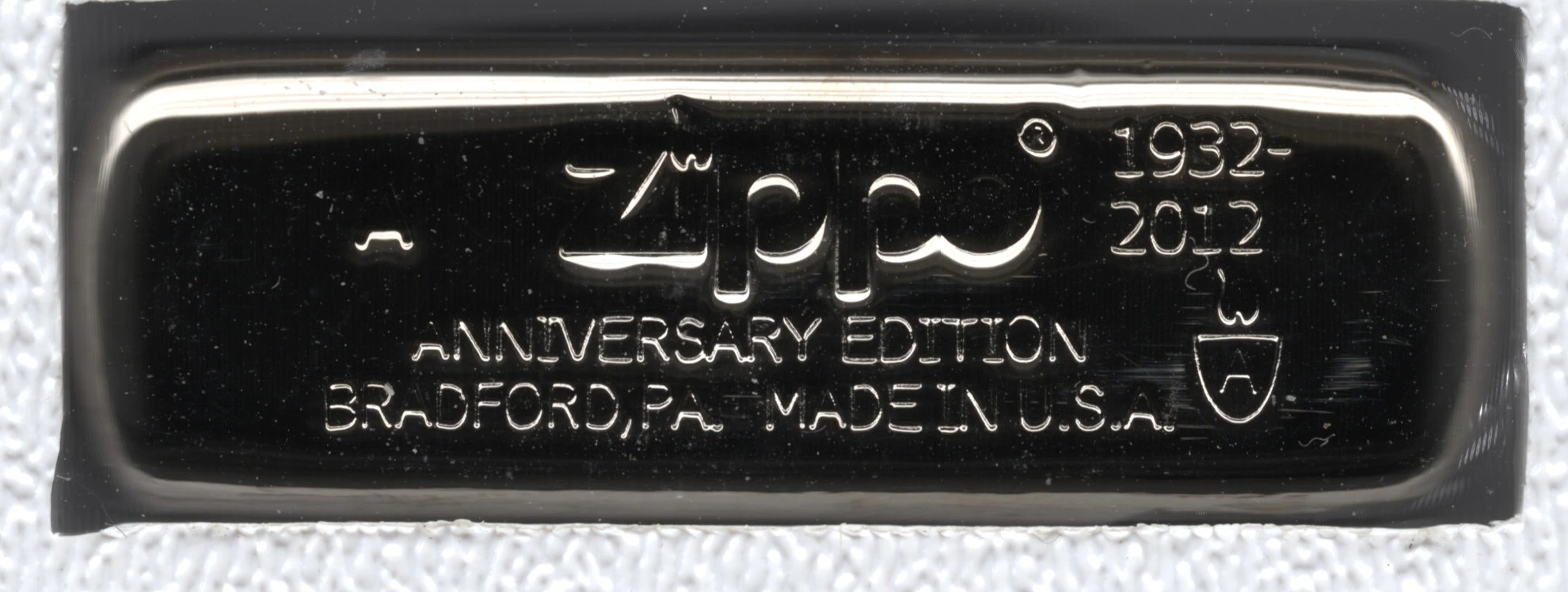
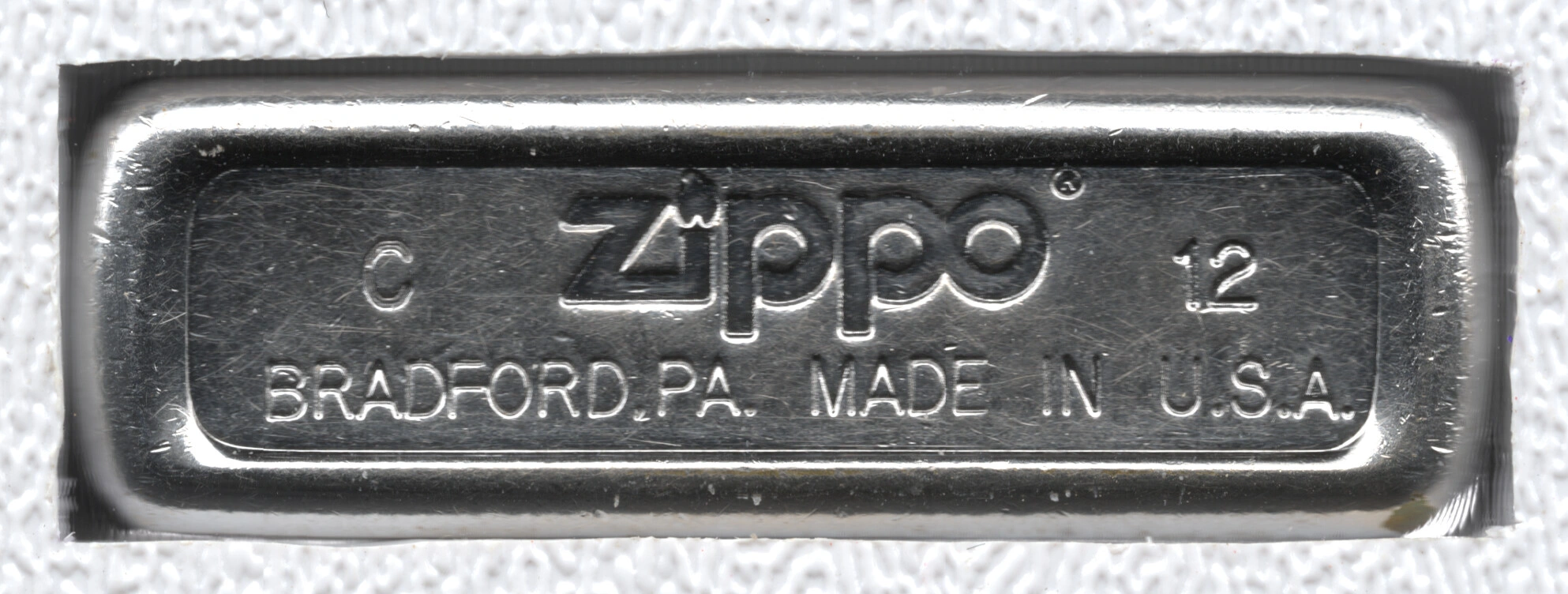
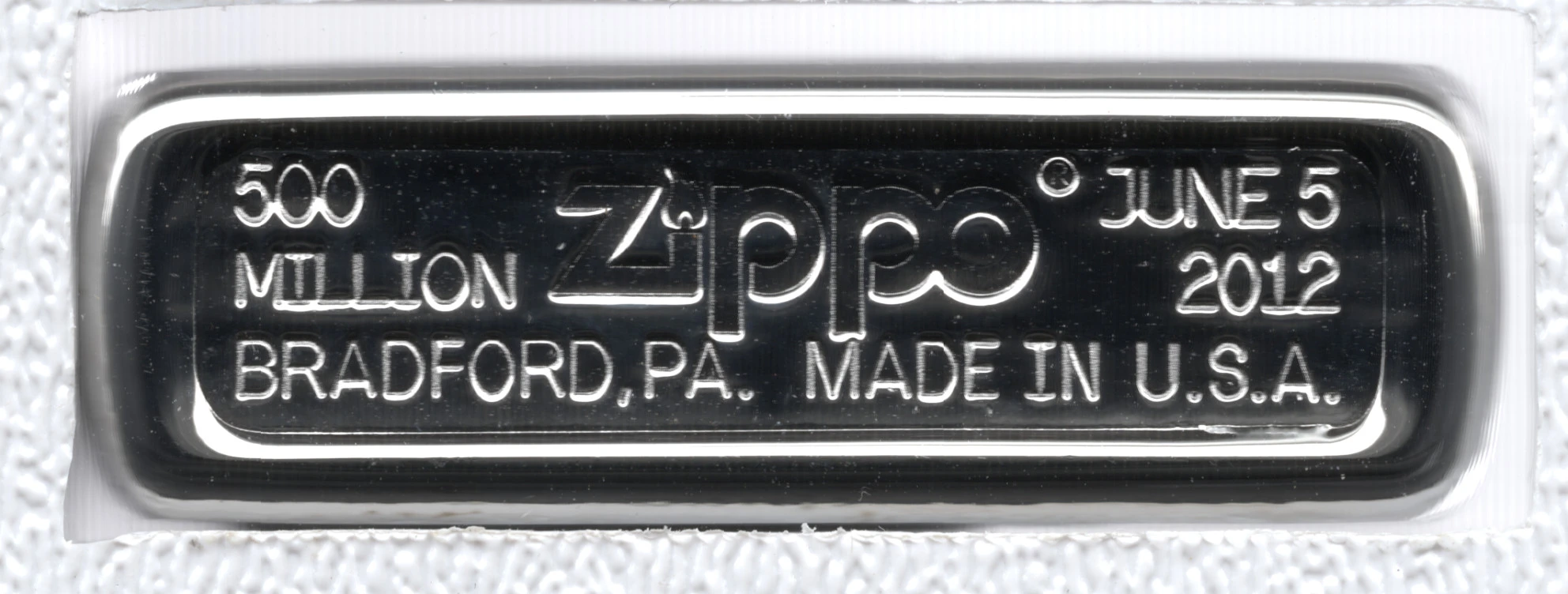
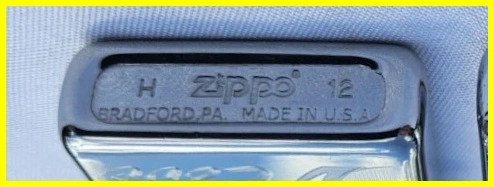
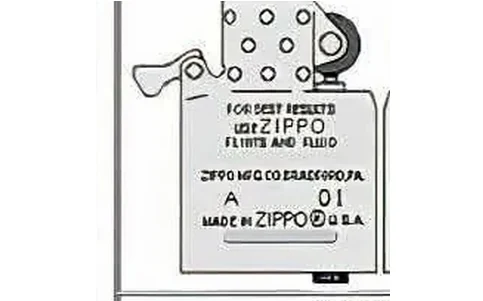
Historical Zippo references associated with 2012: 9 consolidated case/bottom stamp entries, 1 consolidated insert entries, and 25 individual photographic source records. Date codes, materials and insert construction should be assessed together, especially for transitional years.
9 consolidated case references1 consolidated insert references25 documented photo records
Typical US regular-production chronology from independent collector research by Hardi Döhler. The ranges overlap, and Canada, Slim, Replica, Sterling, Japan-market and special editions may differ. These are supporting observations, not a definitive date determination.
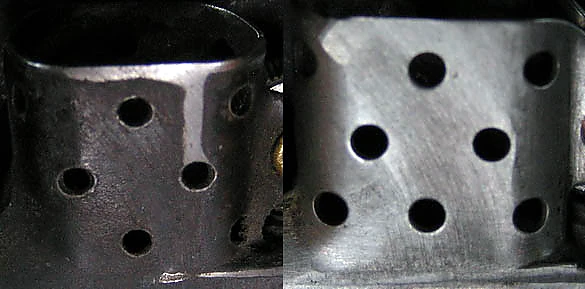
16-hole chimney — Introduced during 1946; not useful as a precise clue on later inserts. Known period: 1946–9999. Dating evidence: Secondary dating clue (Construction or material information that may narrow a period. Repairs, replacement parts and production overlaps can change the interpretation.). Sources: Glen's Zippo Page.16-hole chimney · Historical reference illustration · Source: Glen's Zippo Page
Tapered cam-spring end — Minor cam-spring alteration reported around 1988/89. Known period: 1988–9999. Dating evidence: Supporting comparison (A useful illustrated or photographed comparison. The feature alone does not establish a unique production date.). Sources: Glen's Zippo Page.Tapered cam-spring end · Historical reference illustration · Source: Glen's Zippo Page
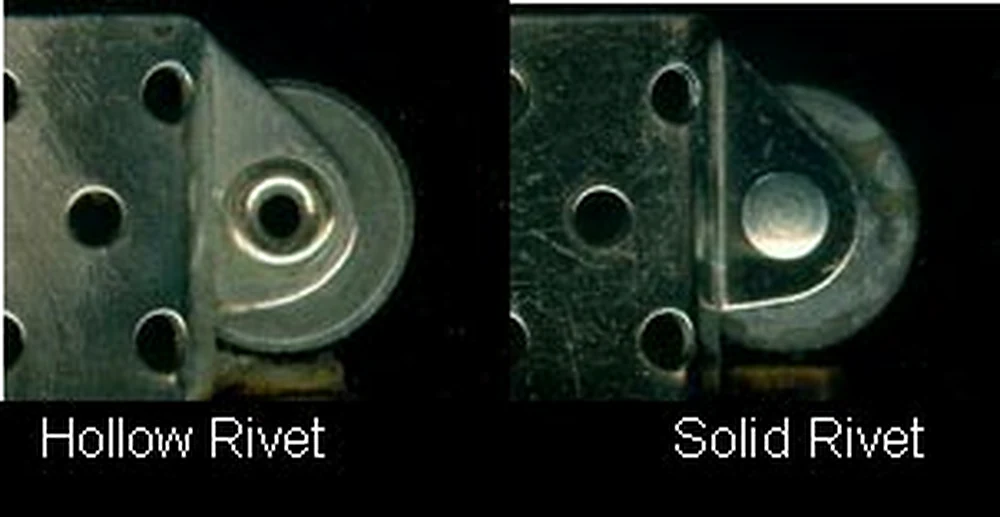
Solid flint-wheel rivet — Introduced around 1961; overlaps hollow rivets for several years. Known period: 1961–9999. Dating evidence: Supporting comparison (A useful illustrated or photographed comparison. The feature alone does not establish a unique production date.). Sources: Glen's Zippo Page.Solid flint-wheel rivet · Historical reference illustration · Source: Glen's Zippo Page
Additional reverse-side text — Additional reverse text appears around 1975/76. Known period: 1975–9999. Dating evidence: Secondary dating clue (Construction or material information that may narrow a period. Repairs, replacement parts and production overlaps can change the interpretation.). Sources: Glen's Zippo Page.
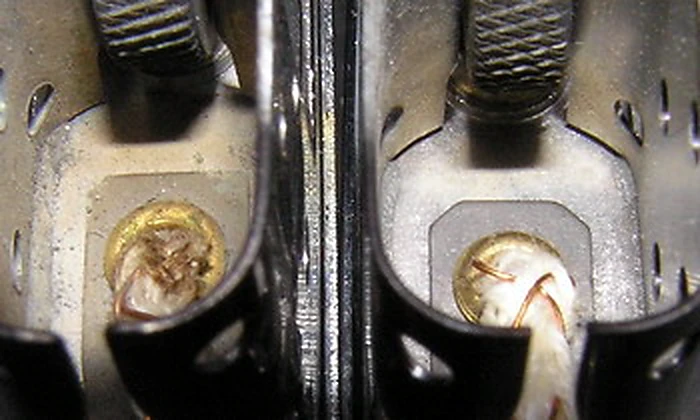
Copper-wire wick — Wick design changed around 1980 to include intertwined copper wire. Known period: 1980–9999. Dating evidence: Secondary dating clue (Construction or material information that may narrow a period. Repairs, replacement parts and production overlaps can change the interpretation.). Sources: Glen's Zippo Page.
Regular insert date code use — Date codes are reported as fully in use by 1984. Known period: 1984–9999. Dating evidence: Primary dating clue (An established factory date code or a directly relevant stamp system. Check the complete marking and model type; it is not a certificate of authenticity.). Sources: Glen's Zippo Page.
Horizontal insert rib — Introduced from March 2001. Known period: 2001–9999. Dating evidence: Secondary dating clue (Construction or material information that may narrow a period. Repairs, replacement parts and production overlaps can change the interpretation.). Sources: Glen's Zippo Page.
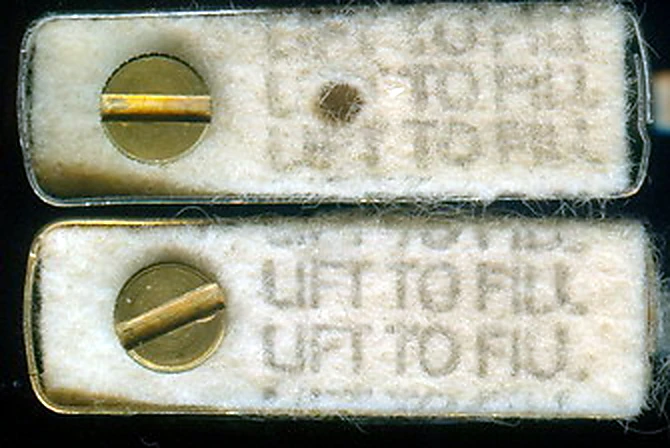
Felt hole reappears — Small hole reappears toward the end of 2001. Known period: 2001–9999. Dating evidence: Supporting comparison (A useful illustrated or photographed comparison. The feature alone does not establish a unique production date.). Sources: Glen's Zippo Page.Felt hole reappears · Historical reference illustration · Source: Glen's Zippo Page
Cam indentation — Reported from August 2003 on both sides of the cam. Known period: 2003–9999. Dating evidence: Secondary dating clue (Construction or material information that may narrow a period. Repairs, replacement parts and production overlaps can change the interpretation.). Sources: Glen's Zippo Page.
Interpretation: References may cover multiple years. A documented insert date is not proof of its case production date, and special Replica stamps require separate interpretation.