Canadian production note
The Niagara Falls plant closed on 31 July 2002. The closure was commemorated by a numbered silver-plated Final Production Run edition limited to 25,000 pieces.
Historical year lookup
Historical Zippo references associated with 2002: 14 consolidated case/bottom stamp entries, 2 consolidated insert entries, and 36 individual photographic source records. Date codes, materials and insert construction should be assessed together, especially for transitional years.
The Niagara Falls plant closed on 31 July 2002. The closure was commemorated by a numbered silver-plated Final Production Run edition limited to 25,000 pieces.
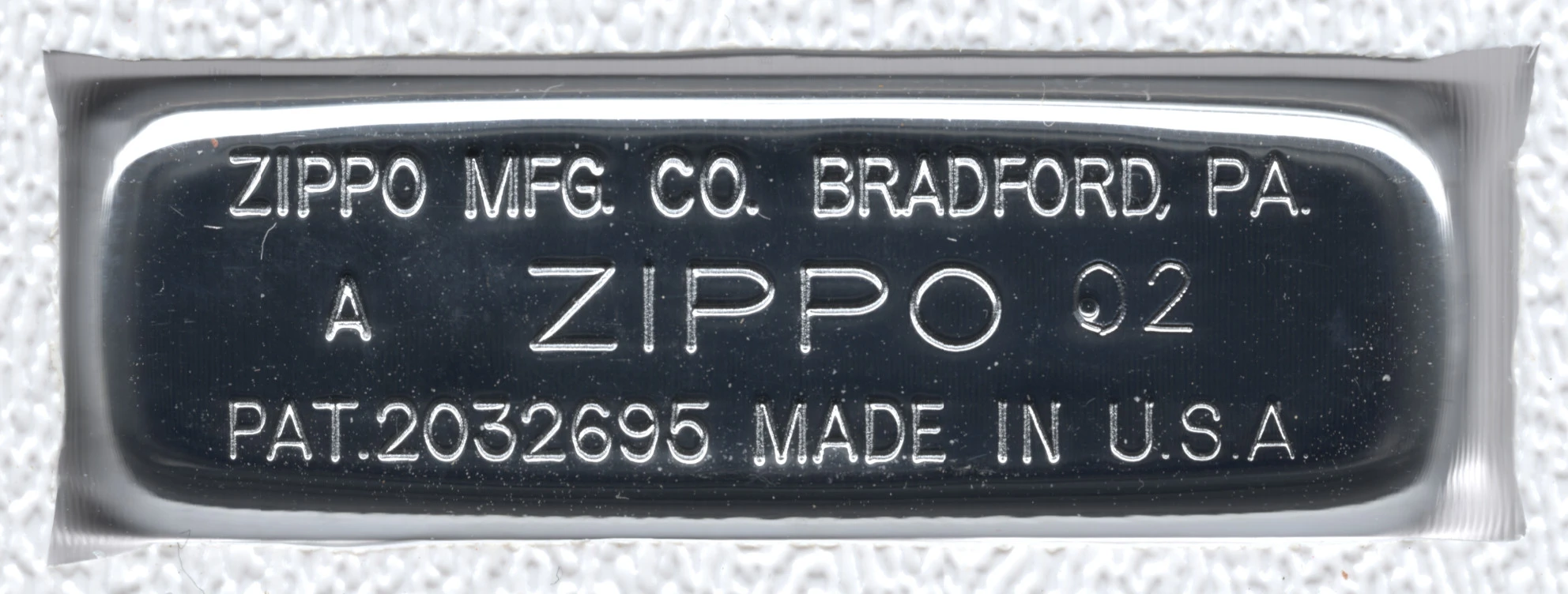
Case / bottom stamp · 2002
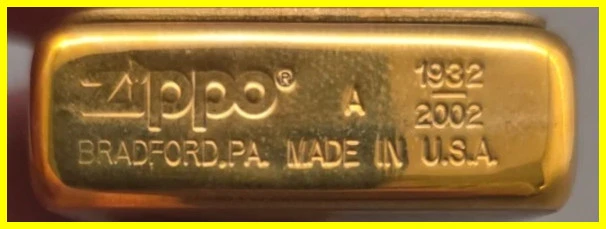
Case / bottom stamp · 2002
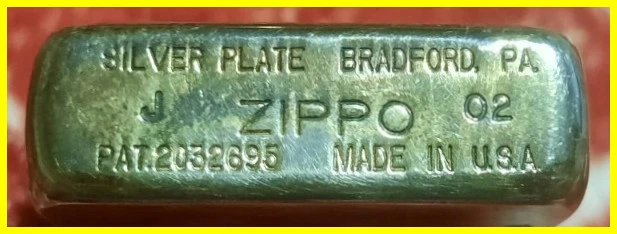
Case / bottom stamp · 2002
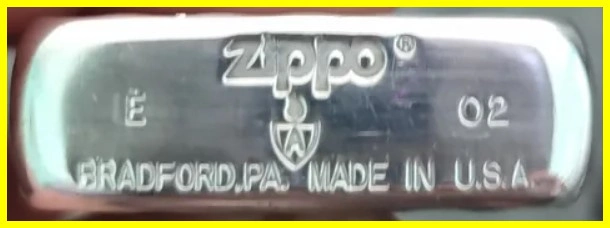
Case / bottom stamp · 2002
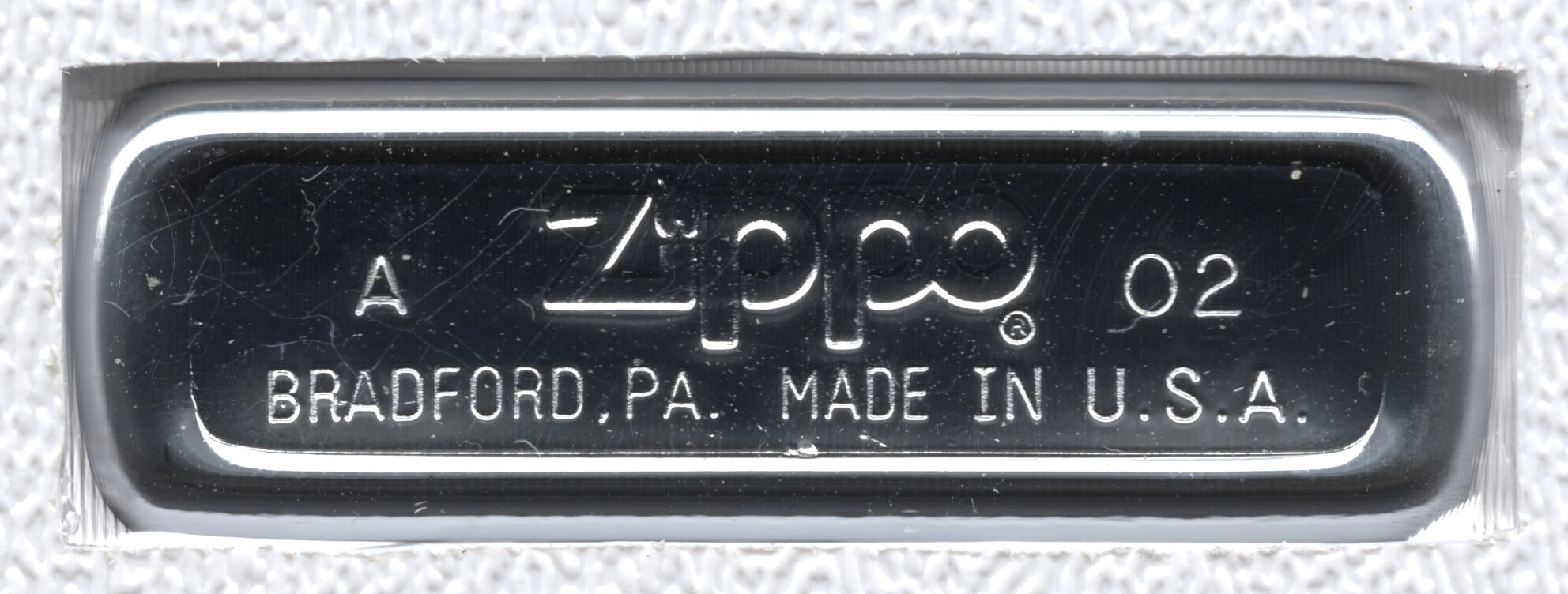
Case / bottom stamp · 2002
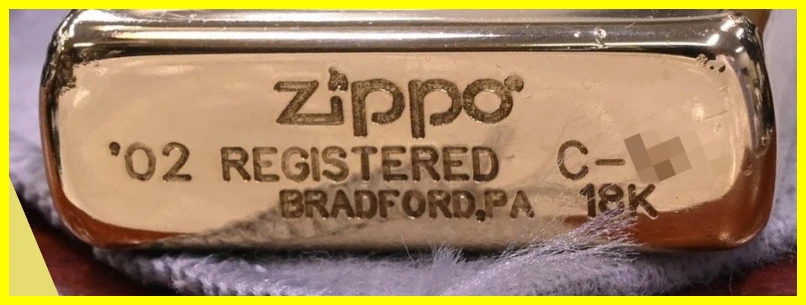
Case / bottom stamp · 2002
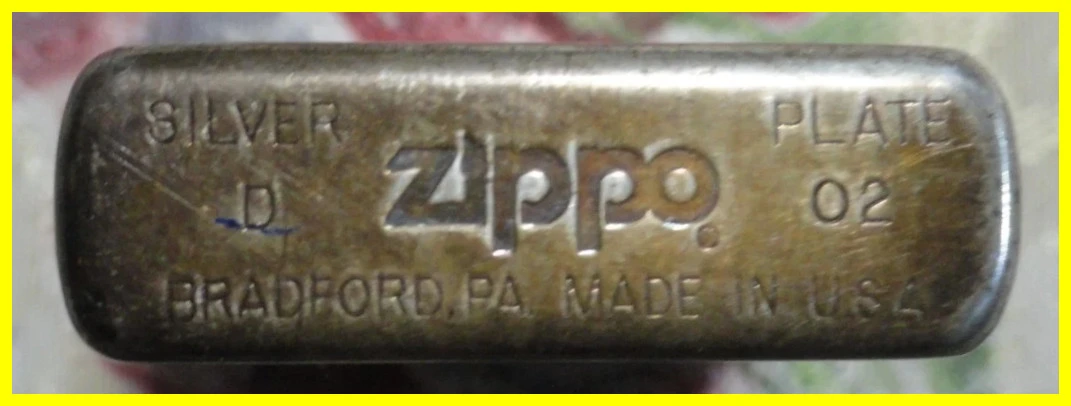
Case / bottom stamp · 2002
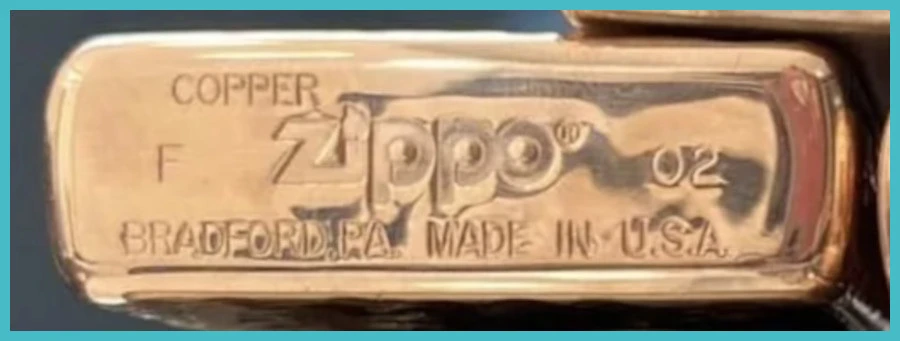
Case / bottom stamp · 2002
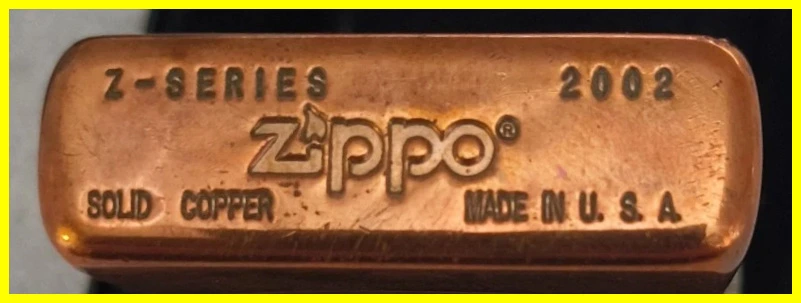
Case / bottom stamp · 2002
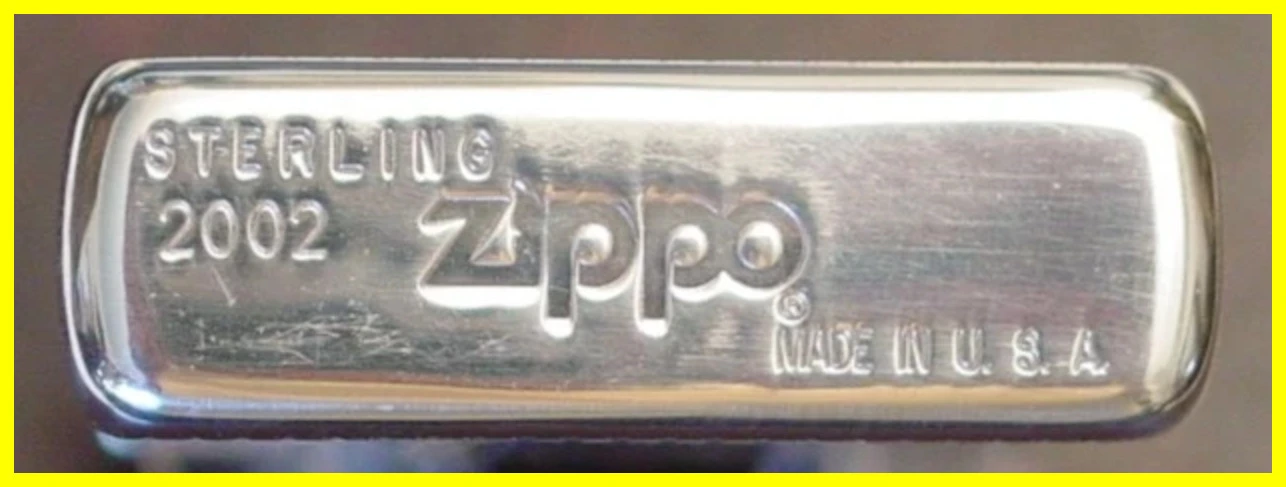
Case / bottom stamp · 2002
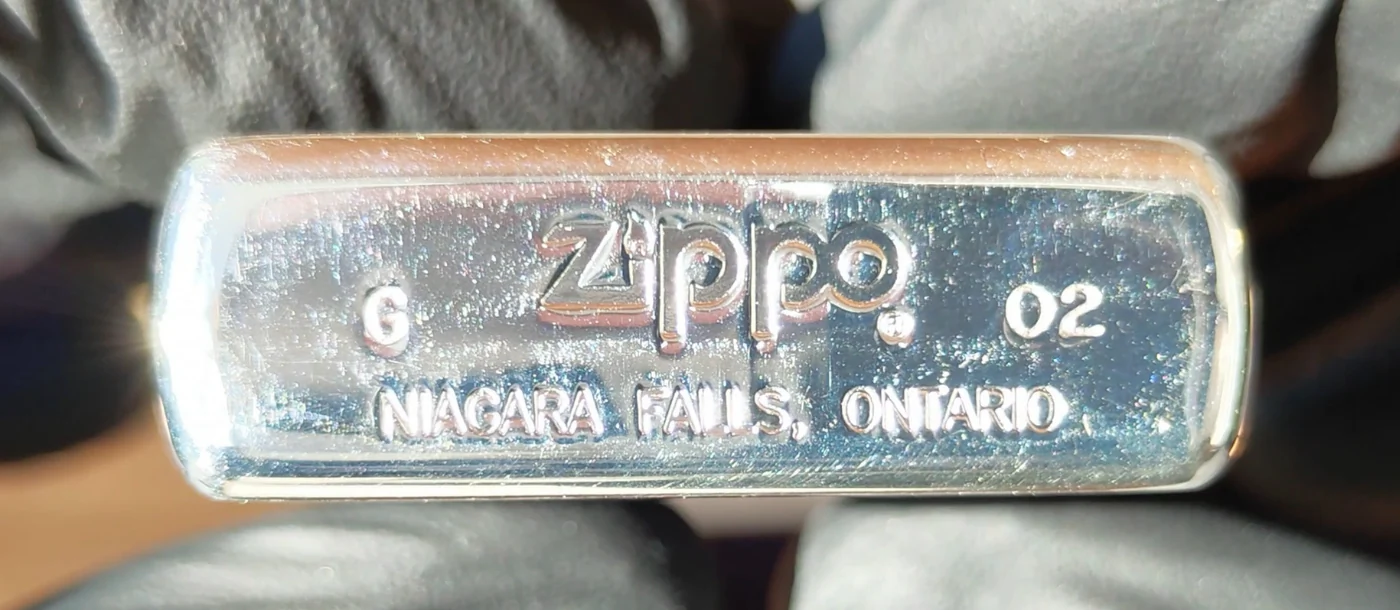
Case / bottom stamp · 2002
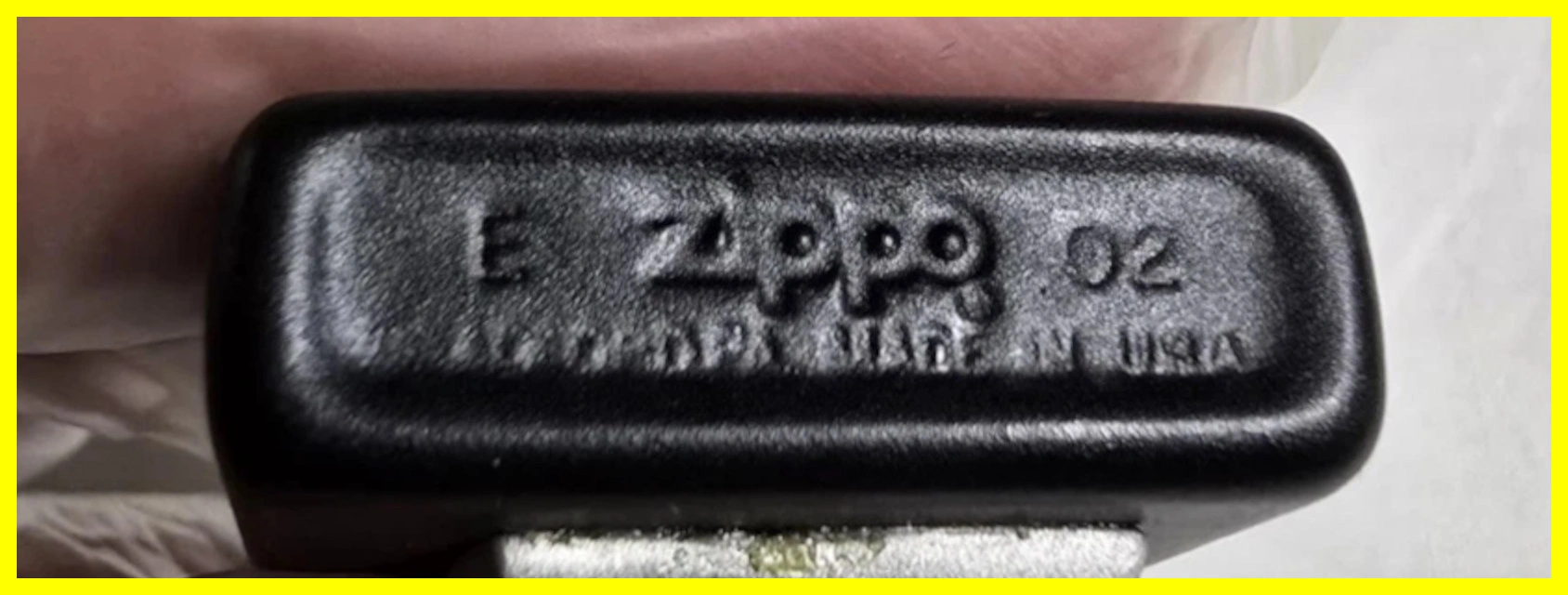
Case / bottom stamp · 2002
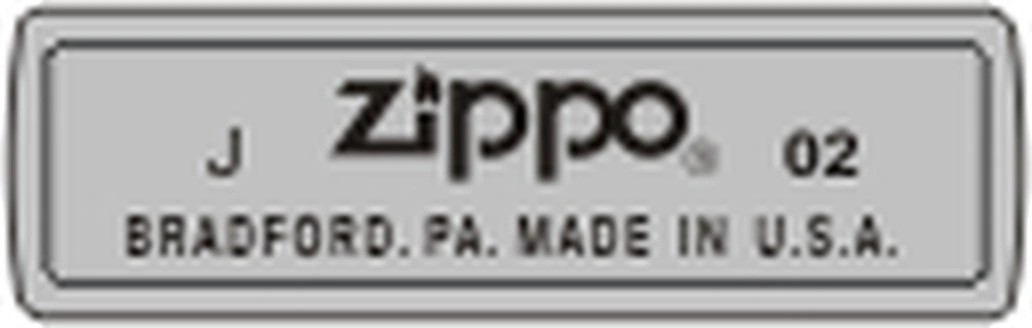
Case / bottom stamp · 2002
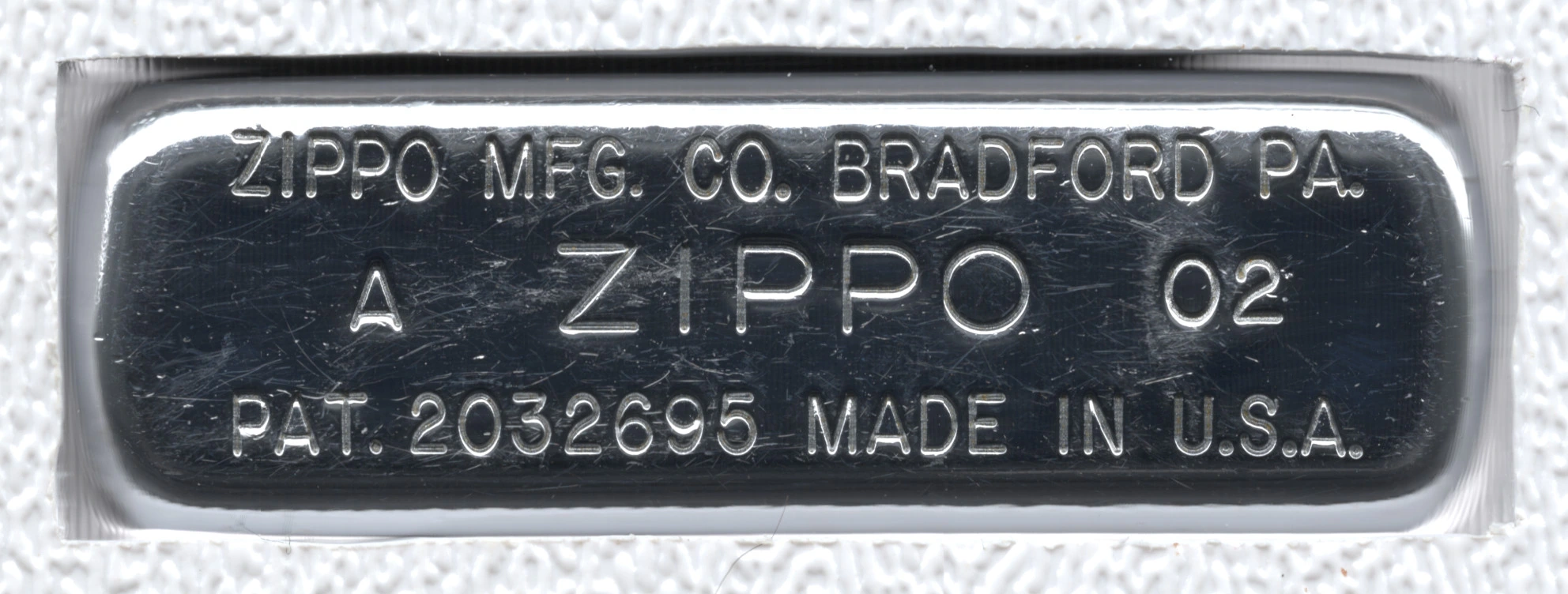
Case / bottom stamp · 2002
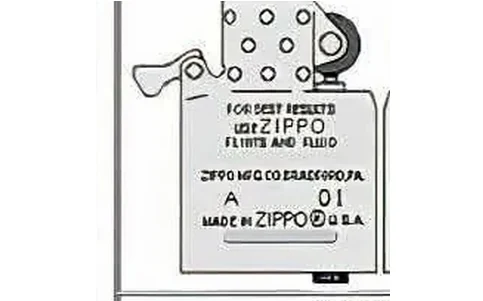
Insert reference · 2001–2013
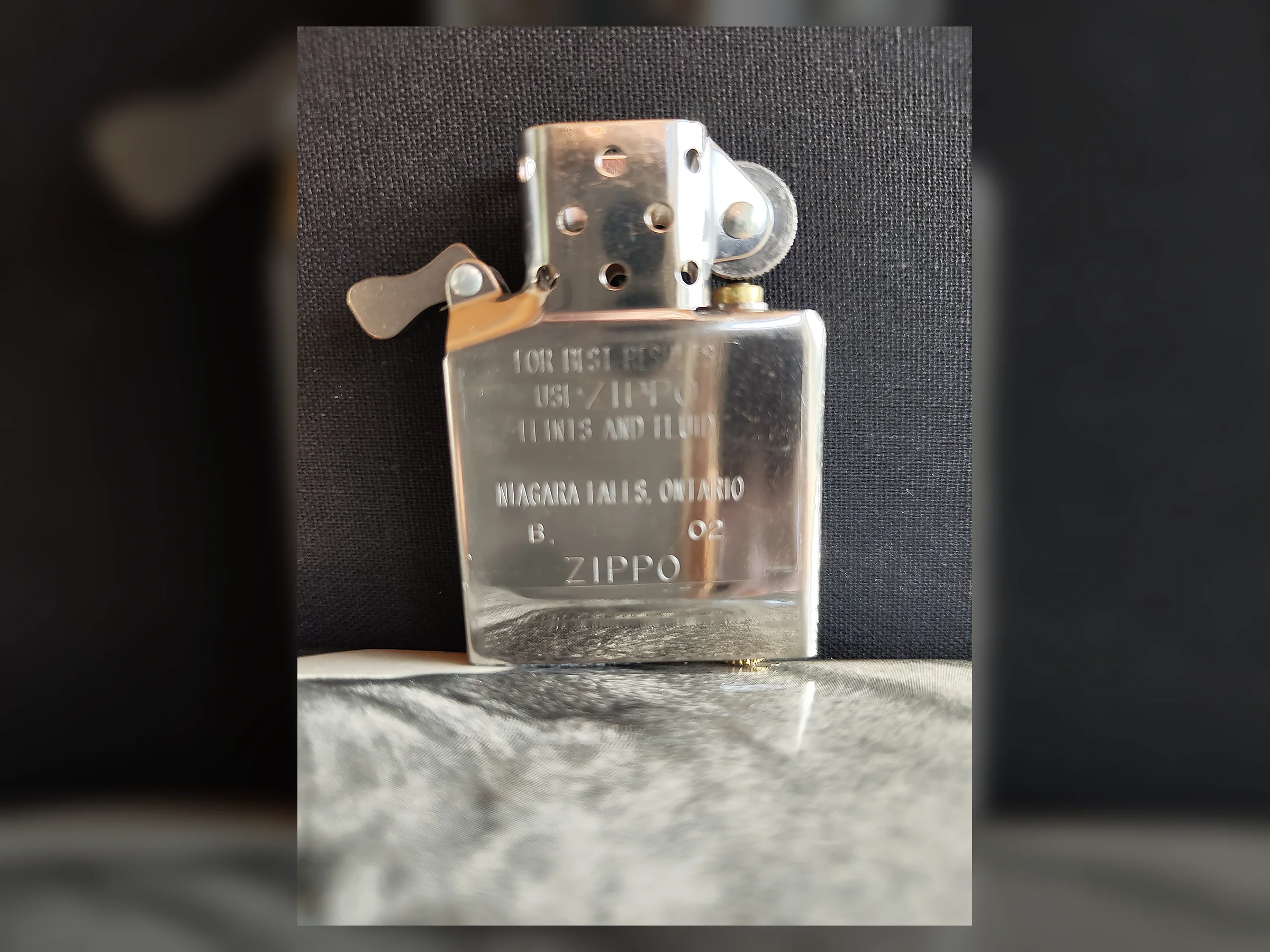
Insert reference · 2002
Typical US regular-production chronology from independent collector research by Hardi Döhler. The ranges overlap, and Canada, Slim, Replica, Sterling, Japan-market and special editions may differ. These are supporting observations, not a definitive date determination.
The familiar recessed-bottom case profile develops in the postwar years; this alone cannot distinguish later decades.
Present-day cases, replicas and special lines can depart from the usual form.
Chrome-plated brass becomes typical again in the mid-1950s; special materials and later editions are exceptions.
Typical Bradford-made regular lighter; exceptions and overlapping production runs exist.
Later five-barrel hinges generally have an uneven barrel-width pattern. This broad clue cannot determine a precise year.
Typical Bradford-made regular lighter; exceptions and overlapping production runs exist.
Chrome-plated steel construction with a seam is typical of later regular inserts, but special and premium variants differ.
Typical Bradford-made regular lighter; exceptions and overlapping production runs exist.
Two-sided marking layouts appear through later insert generations, alongside evolving date-code placements.
Typical Bradford-made regular lighter; exceptions and overlapping production runs exist.
Sixteen holes and an open wheel-side chimney wall become typical from the late 1940s onward.
Typical Bradford-made regular lighter; exceptions and overlapping production runs exist.
Later springs show wheel-side shaping/tapering; date the insert using inscriptions and other details as well.
Typical Bradford-made regular lighter; exceptions and overlapping production runs exist.
Cross-cut flint-wheel pattern becomes typical after the war, with possible overlap and replacements.
Typical Bradford-made regular lighter; exceptions and overlapping production runs exist.
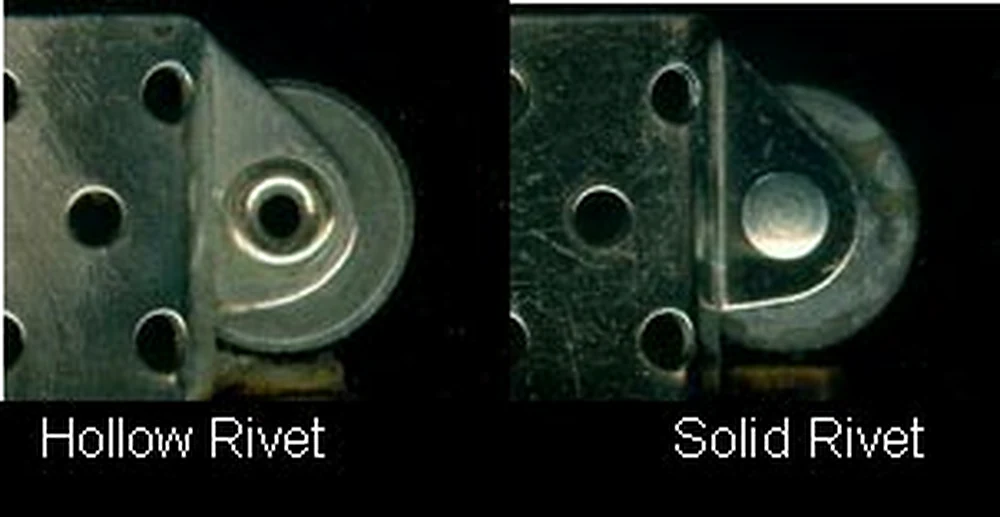
Solid rivets become typical from the mid-1960s onward.
Typical Bradford-made regular lighter; exceptions and overlapping production runs exist.
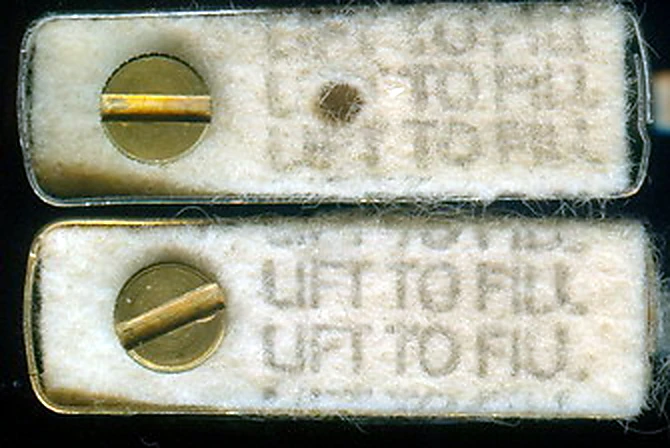
A felt pad with black LIFT TO FILL text and a spare-flint hole is a common later version.
Typical Bradford-made regular lighter; exceptions and overlapping production runs exist.
Copper-wire reinforcement becomes common around 1980; wicks are consumables and cannot reliably date a case.
Typical Bradford-made regular lighter; exceptions and overlapping production runs exist.
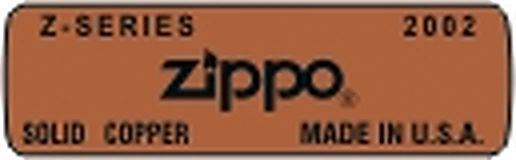
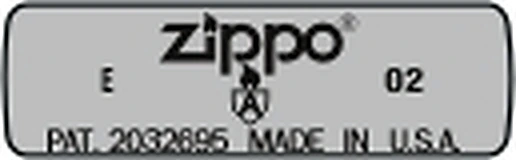
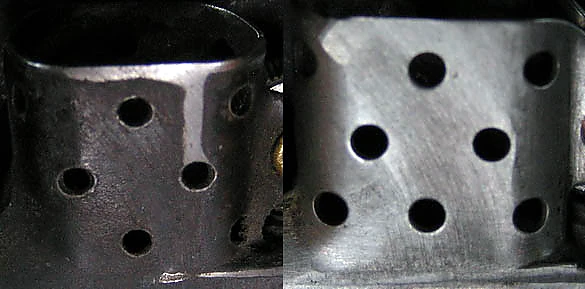
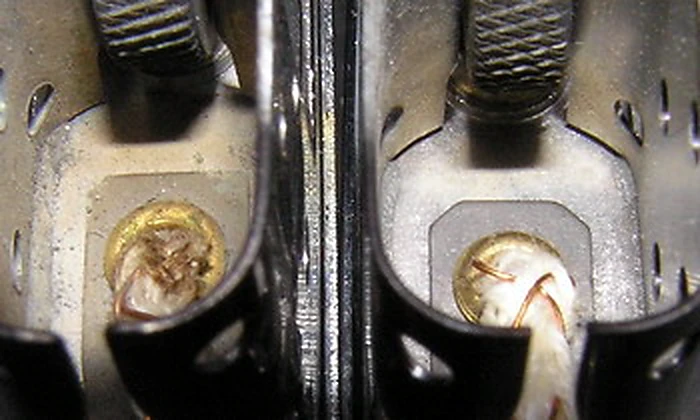
Interpretation: References may cover multiple years. A documented insert date is not proof of its case production date, and special Replica stamps require separate interpretation.