Historical dating note
A real 1956 Bradford example supplied by Terry Lyons documents a brass case with steel insert and provides a photographed dot-layout comparison.
Historical year lookup
Historical Zippo references associated with 1956: 10 consolidated case/bottom stamp entries, 2 consolidated insert entries, and 14 individual photographic source records. Date codes, materials and insert construction should be assessed together, especially for transitional years.
A real 1956 Bradford example supplied by Terry Lyons documents a brass case with steel insert and provides a photographed dot-layout comparison.
Zippo begins production of Slim lighters. Early Slims have a flat bottom; the insert uses a wheel guard (“cobra head”) over the flint wheel.
Canadian hinge transition: unequal five-barrel spacing is generally treated as 1956 and later.

Case / bottom stamp · 1951–1963
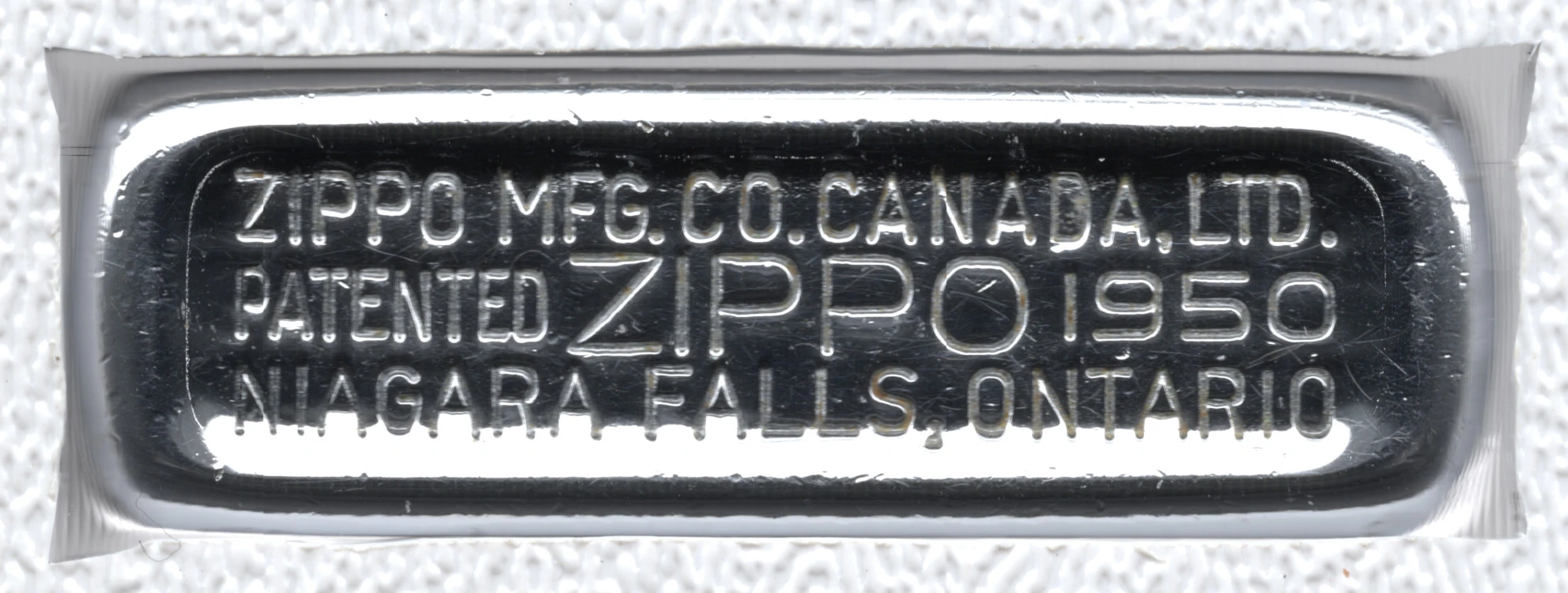
Case / bottom stamp · 1951–1967
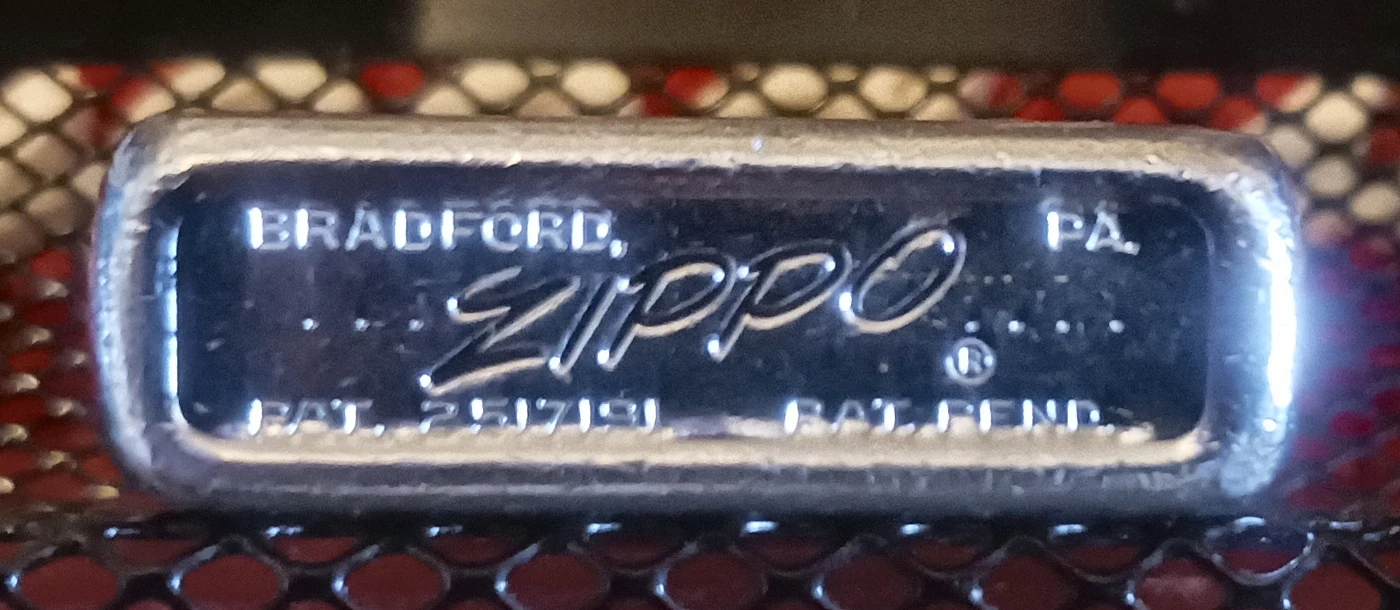
Case / bottom stamp · 1956
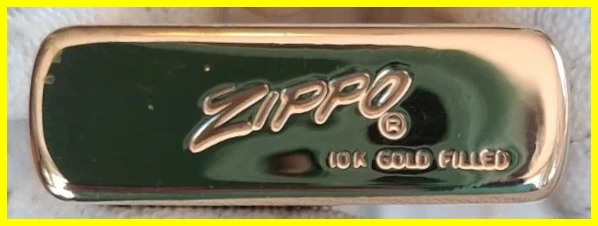
Case / bottom stamp · 1956
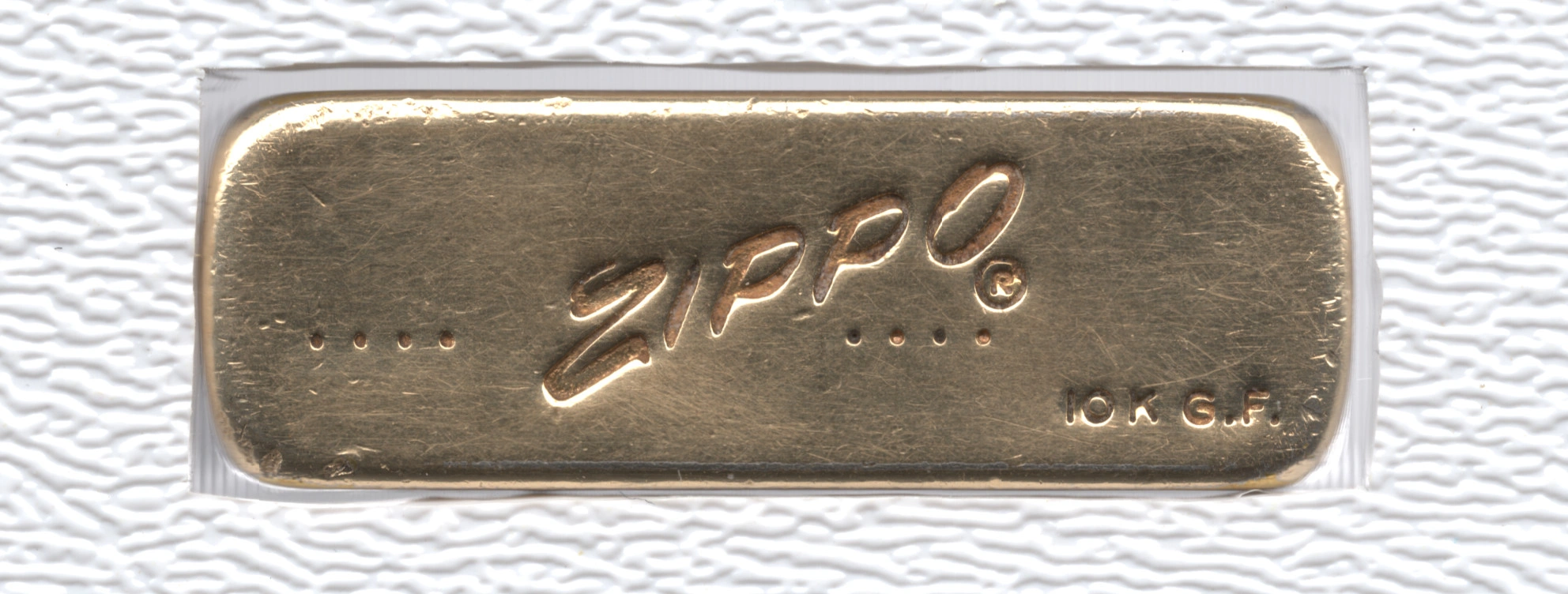
Case / bottom stamp · 1956–1957
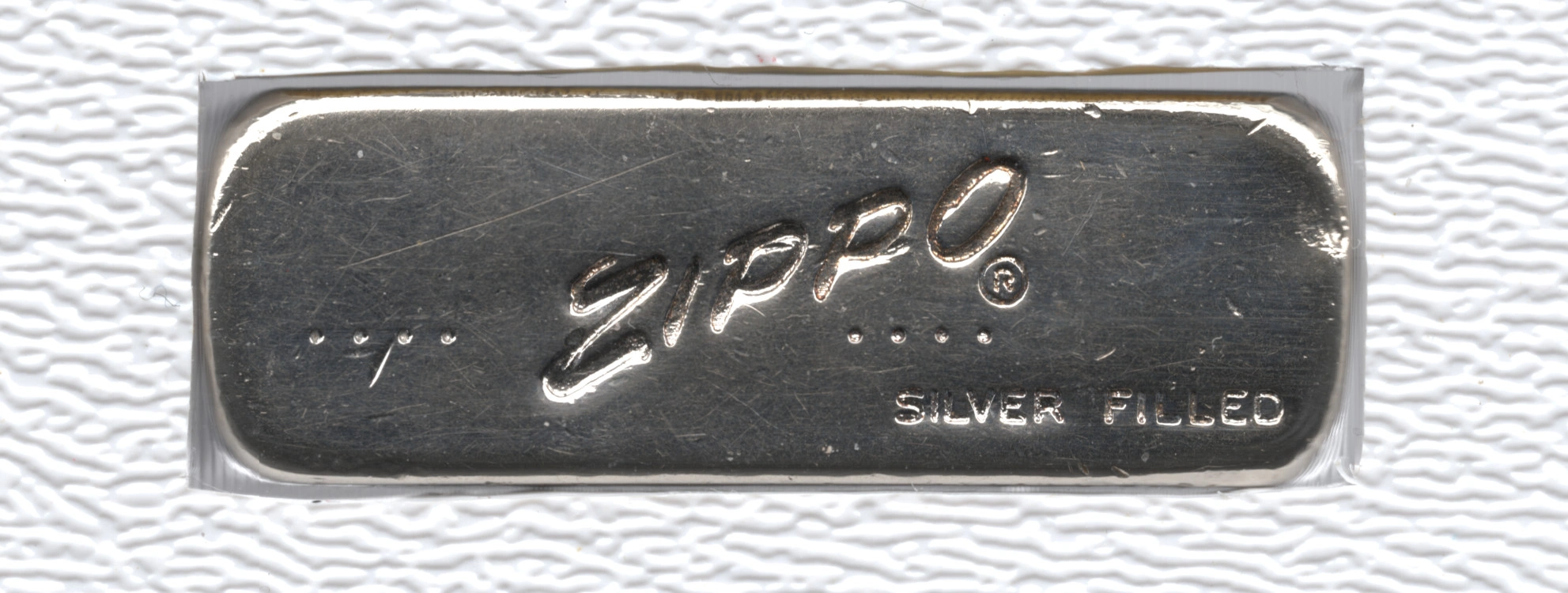
Case / bottom stamp · 1956–1957

Case / bottom stamp · 1956–1957
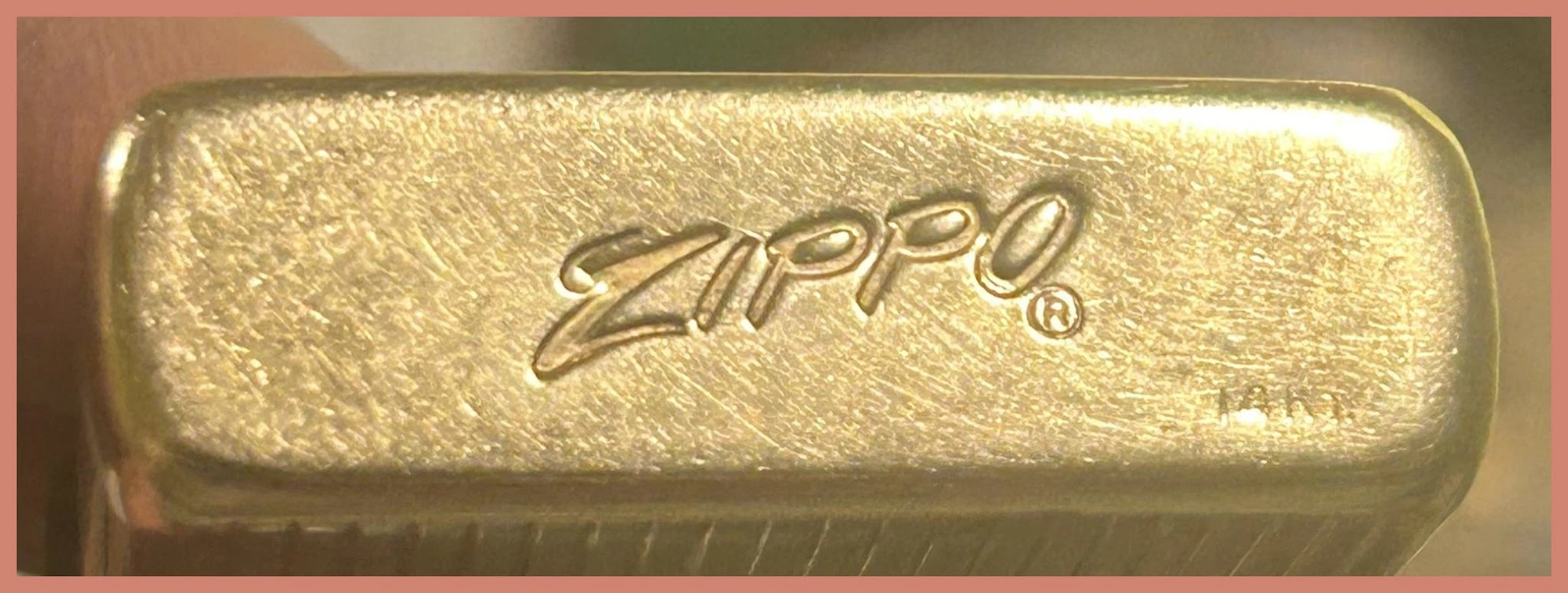
Case / bottom stamp · 1956–1968
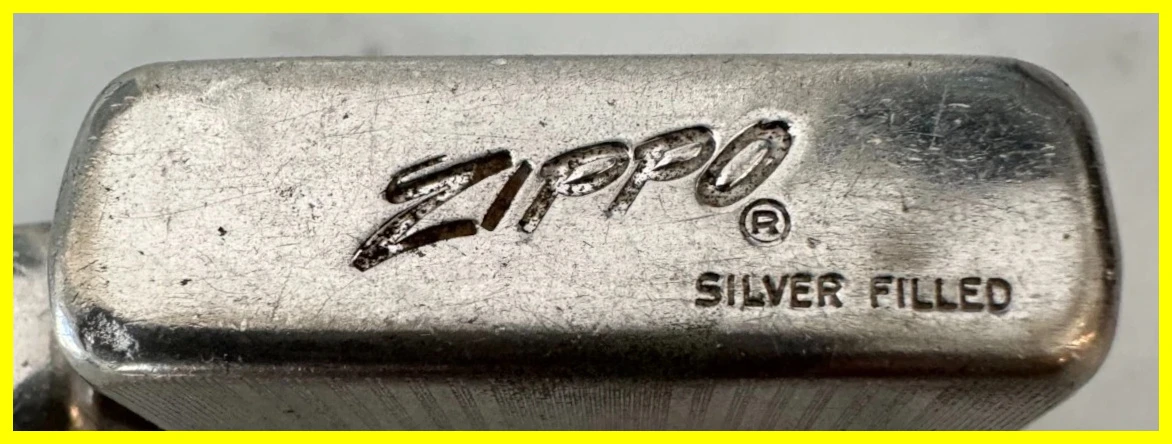
Case / bottom stamp · 1956–1968
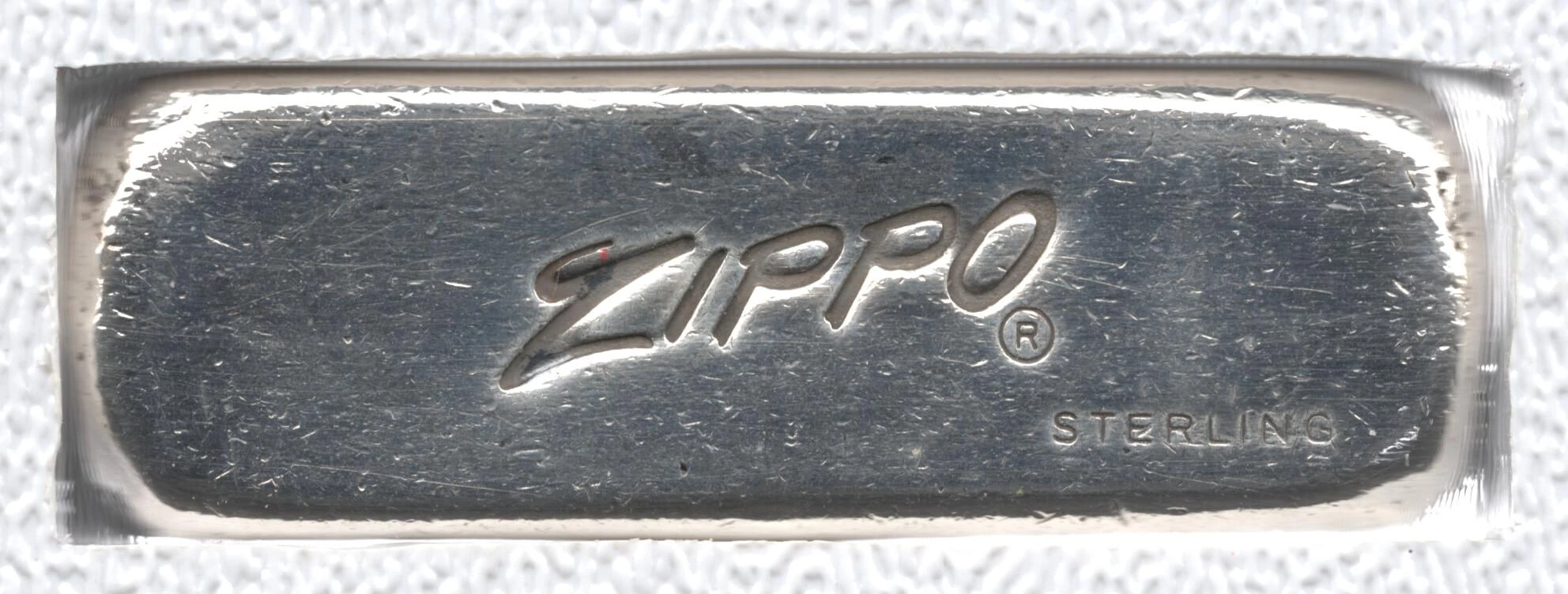
Case / bottom stamp · 1956–1968
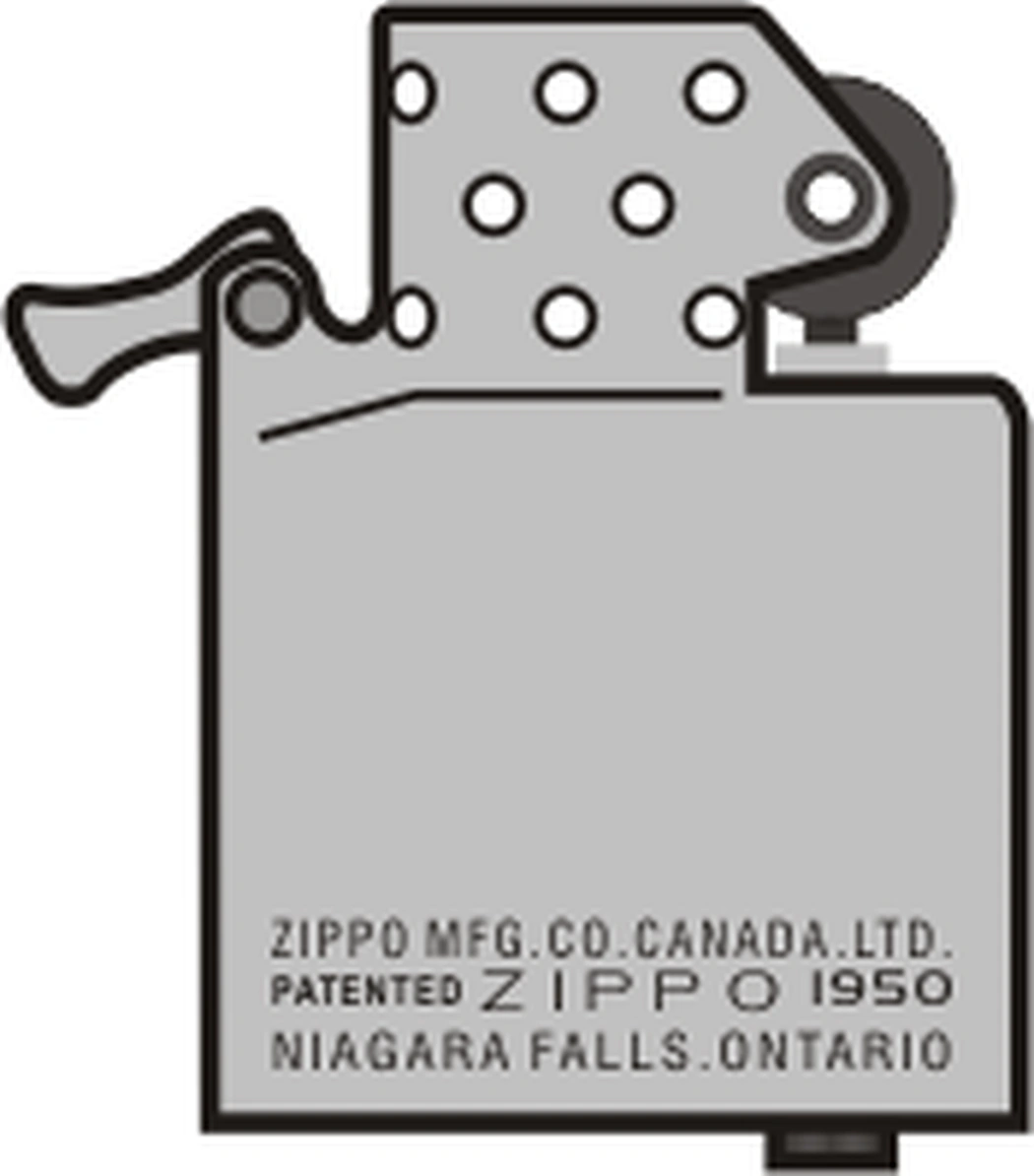
Insert reference · 1951–1958
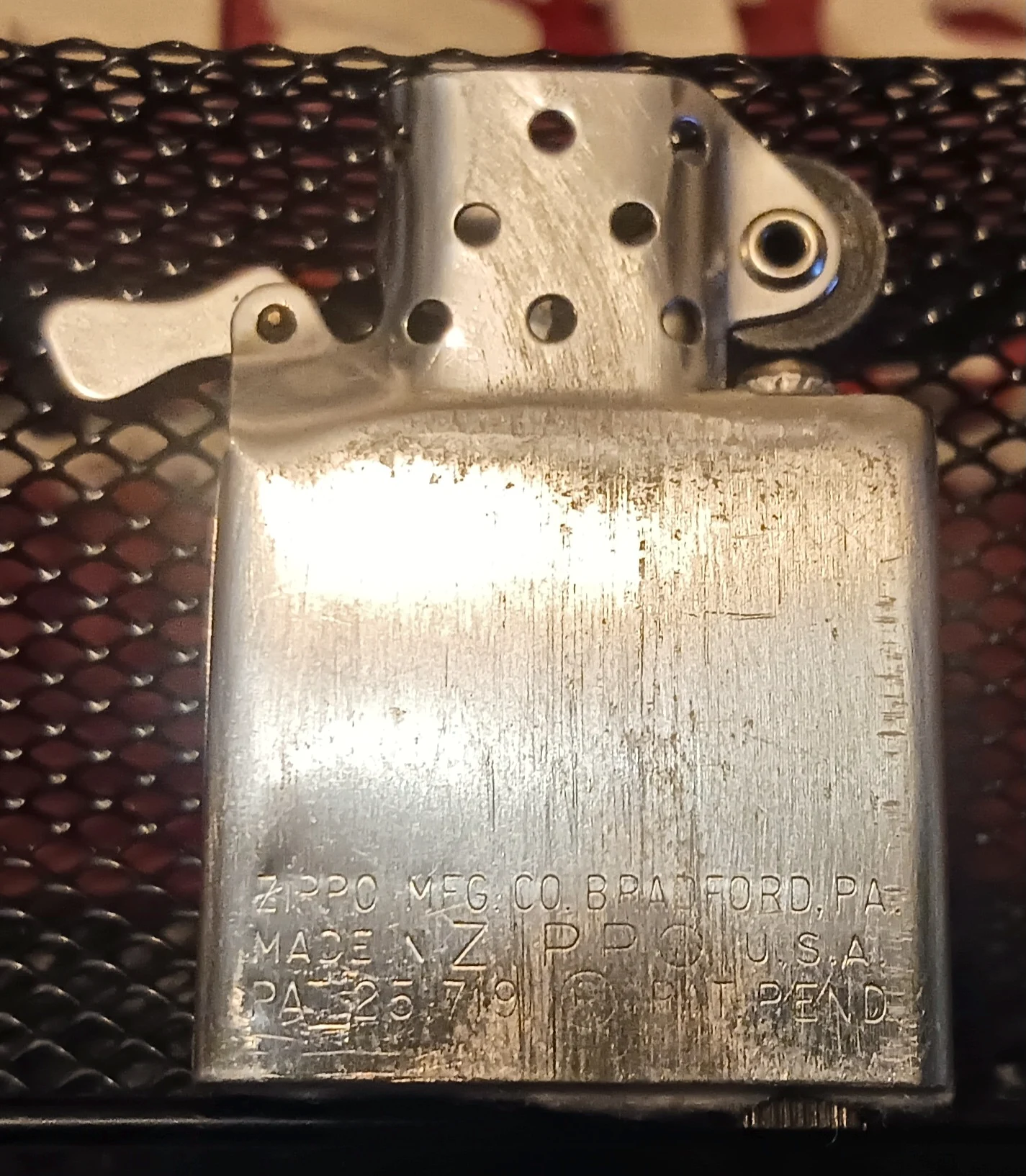
Insert reference · 1956
Typical US regular-production chronology from independent collector research by Hardi Döhler. The ranges overlap, and Canada, Slim, Replica, Sterling, Japan-market and special editions may differ. These are supporting observations, not a definitive date determination.
The familiar recessed-bottom case profile develops in the postwar years; this alone cannot distinguish later decades.
Present-day cases, replicas and special lines can depart from the usual form.
Chrome-plated brass becomes typical again in the mid-1950s; special materials and later editions are exceptions.
Typical Bradford-made regular lighter; exceptions and overlapping production runs exist.
Five-barrel hinges with relatively even barrel widths appear from late 1949 onward.
Typical Bradford-made regular lighter; exceptions and overlapping production runs exist.
Later five-barrel hinges generally have an uneven barrel-width pattern. This broad clue cannot determine a precise year.
Typical Bradford-made regular lighter; exceptions and overlapping production runs exist.
Collectors document combinations of the second patent number and patent-pending text during the mid-1950s.
Patent number issued in 1950; the appearance of particular stamp layouts may be later.
Chrome-plated steel construction with a seam is typical of later regular inserts, but special and premium variants differ.
Typical Bradford-made regular lighter; exceptions and overlapping production runs exist.
One-sided patent/instruction layout is common in several mid-century insert families; the exact layout evolved.
Typical Bradford-made regular lighter; exceptions and overlapping production runs exist.
Sixteen holes and an open wheel-side chimney wall become typical from the late 1940s onward.
Typical Bradford-made regular lighter; exceptions and overlapping production runs exist.
The arched/humped leaf cam spring is documented across several prewar and postwar decades.
The photographed 1947 Terry Lyons example has a modern replacement spring; never infer 1947 spring design from that component.
Cross-cut flint-wheel pattern becomes typical after the war, with possible overlap and replacements.
Typical Bradford-made regular lighter; exceptions and overlapping production runs exist.
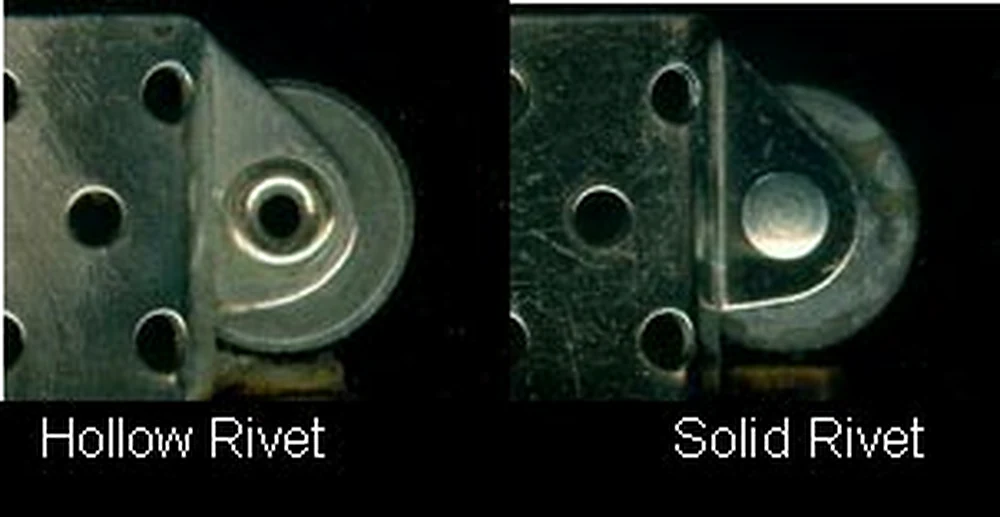
Hollow flint-wheel rivets appear through the early 1960s; later examples may carry replaced components.
Typical Bradford-made regular lighter; exceptions and overlapping production runs exist.
A plain pale rectangular felt pad is documented across many decades; replacement pads limit its dating precision.
Typical Bradford-made regular lighter; exceptions and overlapping production runs exist.
Older wick styles can differ from the later copper-wire-interwoven wick; repairs commonly replace wicks.
Some historic wick materials may contain asbestos; avoid disturbing uncertain old material.
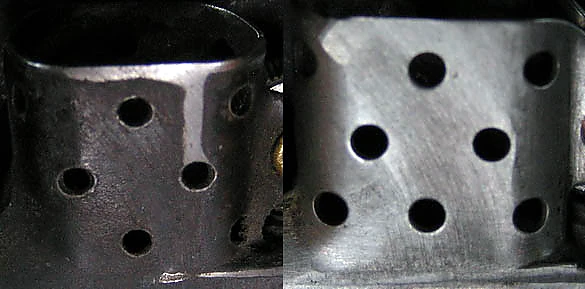
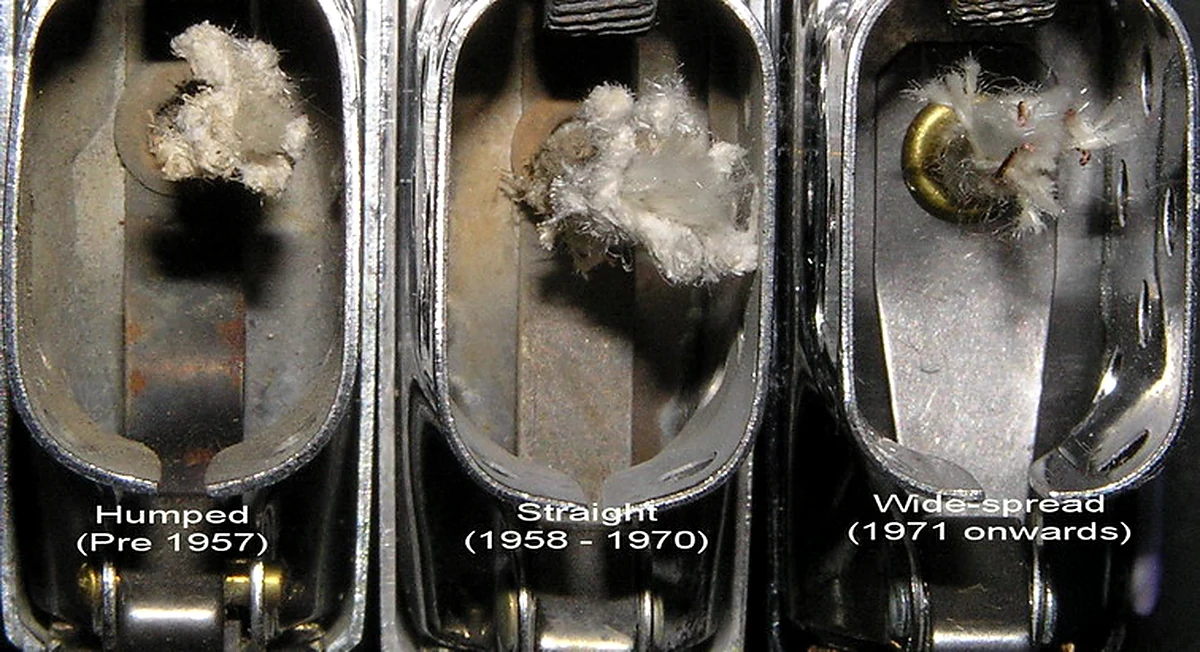
Interpretation: References may cover multiple years. A documented insert date is not proof of its case production date, and special Replica stamps require separate interpretation.