
1934–1936 · Regular · Bradford
Case / bottom stamp · 1934–1936
Historical year lookup
Historical Zippo references associated with 1936: 3 consolidated case/bottom stamp entries, 2 consolidated insert entries, and 5 individual photographic source records. Date codes, materials and insert construction should be assessed together, especially for transitional years.
Case / bottom stamp · 1934–1936

Case / bottom stamp · 1936–1940
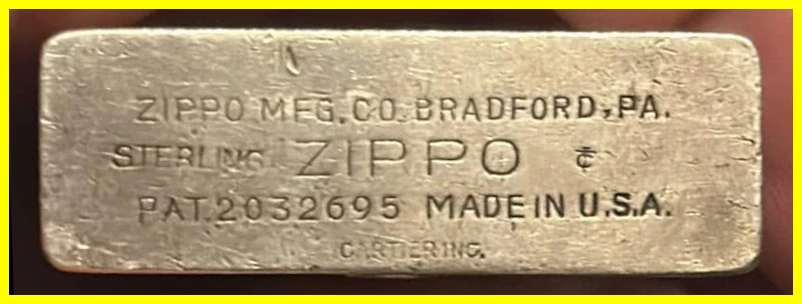
Case / bottom stamp · 1936–1940
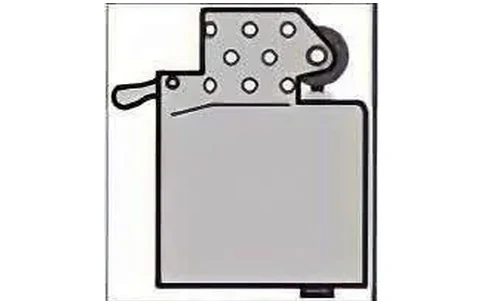
Insert reference · 1933–1936
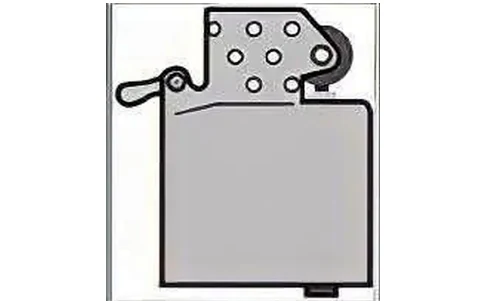
Insert reference · 1936–1942
Typical US regular-production chronology from independent collector research by Hardi Döhler. The ranges overlap, and Canada, Slim, Replica, Sterling, Japan-market and special editions may differ. These are supporting observations, not a definitive date determination.
The taller square-corner case is typical of much of the early production period; subsequent body shapes overlap.
Typical Bradford-made regular lighter; exceptions and overlapping production runs exist.
Chrome-plated brass was a principal prewar case construction; the changeover into steel was gradual.
Typical Bradford-made regular lighter; exceptions and overlapping production runs exist.
An external four-barrel hinge is an early transitional form.
Typical Bradford-made regular lighter; exceptions and overlapping production runs exist.
Four-barrel hinges mounted internally are typical of the later prewar and early wartime period.
Typical Bradford-made regular lighter; exceptions and overlapping production runs exist.
Early case bottoms commonly carry patent-pending wording before the first granted patent number.
Typical Bradford-made regular lighter; exceptions and overlapping production runs exist.
PAT. 2032695 is associated with many late-1930s through early-1950s bottom stamps, with layout variations.
Typical Bradford-made regular lighter; exceptions and overlapping production runs exist.
Early inserts are documented with tubular brass construction; check assembly methods as well as metal.
Typical Bradford-made regular lighter; exceptions and overlapping production runs exist.
Some early insert constructions carry little or no stamped instruction text.
Typical Bradford-made regular lighter; exceptions and overlapping production runs exist.
Fourteen-hole chimneys are characteristic of many prewar and immediate postwar inserts.
Typical Bradford-made regular lighter; exceptions and overlapping production runs exist.
Earliest insert types use a coil-spring-based cam mechanism; other features distinguish exact variants.
Typical Bradford-made regular lighter; exceptions and overlapping production runs exist.
The earliest flint wheels commonly show a predominantly horizontal tooth-cut pattern.
Typical Bradford-made regular lighter; exceptions and overlapping production runs exist.
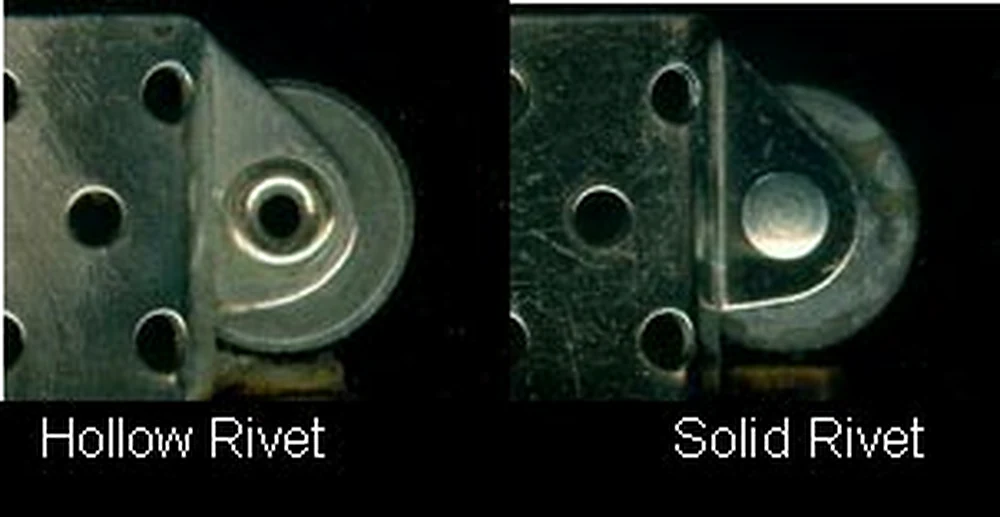
Hollow flint-wheel rivets appear through the early 1960s; later examples may carry replaced components.
Typical Bradford-made regular lighter; exceptions and overlapping production runs exist.
Some early inserts were packed without a modern-style felt pad; preserved originals are important for confirmation.
Typical Bradford-made regular lighter; exceptions and overlapping production runs exist.
Older wick styles can differ from the later copper-wire-interwoven wick; repairs commonly replace wicks.
Some historic wick materials may contain asbestos; avoid disturbing uncertain old material.
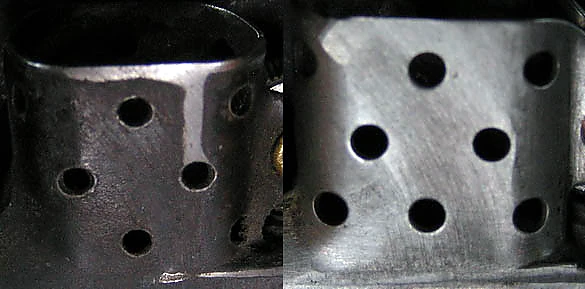
Interpretation: References may cover multiple years. A documented insert date is not proof of its case production date, and special Replica stamps require separate interpretation.